
"The goal of Staka Skenderova's life was to establish a girls' school in Sarajevo, laying the foundation for female education among the Orthodox population of Bosnia."
Alexander Giljferding about Staka Skenderova
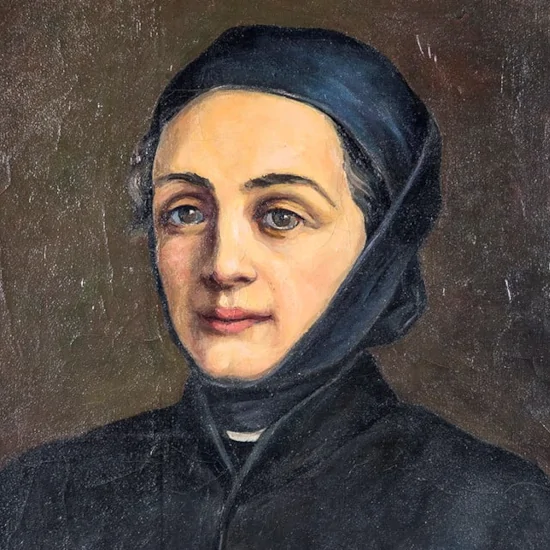
Staka Skenderova was born in Sarajevo in 1831 to a family originally from Prijepolje. After her father's death, her brother, Ilija, took care of her. Staka learned Turkish at an early age, which helped her in dealing with Turkish authorities and obtaining permission and financial support for the operation of the school. Besides Turkish, she spoke Greek and Russian and often assisted Sarajevo's merchants in their business dealings. Her formal education is uncertain, but it is known that she was self-educated or attended a primary school in Sarajevo. She was an avid reader and the only woman of her time who sang in church.
In a time when educating girls was not even considered, Staka opened the first girls' school in Sarajevo in 1858, the Sarajevo Girls' School "St. Sava". Through this, Staka played a significant role in starting female education in Bosnia and Herzegovina. She was an extraordinary woman for her time; she visited Jerusalem, performed the Hajj pilgrimage, and received a monastic title. Her attire and appearance clearly displayed her devotion to renouncing the world. She wore male clothing, was dedicated to the education of girls, and was a friend of Paulina Irby.

Topal Osman-pasha, the Ottoman Vizier in Bosnia at the time, backed Staka's school, which was housed at the Srškić House, because his own daughters went there. Besides Serbian girls, children from Sarajevo's Muslim and Jewish families were also enrolled. The wealthier families paid tuition, which was used to buy materials for handicrafts, while schooling was free for children from poor households. The first official record of examinations in this school was published in the Bosanski Vjestnik newspaper in 1866, praising the work and efforts of Staka and her associates, with special commendation for the handicrafts made by the students. Staka Skenderova's girls' school can be regarded as the beginning of female literacy in Sarajevo. Her students became the first female teachers in schools in Mostar.
Staka Skenderova's life ended tragically when she was run over by a horse carriage while returning from a party in Ilidža in 1891. She passed away on May 26, 1891, and was buried at the Orthodox cemetery in Koševo. As is often the case, recognition for her work, which significantly contributed to the development of Sarajevo, came only after her death. A foreigner passing through Sarajevo in 1868 wrote to a friend in Zagreb about Staka, saying, "But one thing impresses us greatly. In the midst of Sarajevo, where the wilderness of weeds thrives, a teacher emerged—a girl named Staka Skenderova, who seems to us like the Pythia, who prophesied solitary voices of living truth in a desolate cave..."
Her work, "Chronicle of Bosnia", thanks to the Russian consul and traveler Alexander Giljferding, saw the light of day.
The "Codes of Time" project was supported and implemented by the municipality of Istočno Novo Sarajevo
in cooperation and at the idea of the students of class IV3 - IT technicians,
generation 22/23, of the High School "28. Juni".